
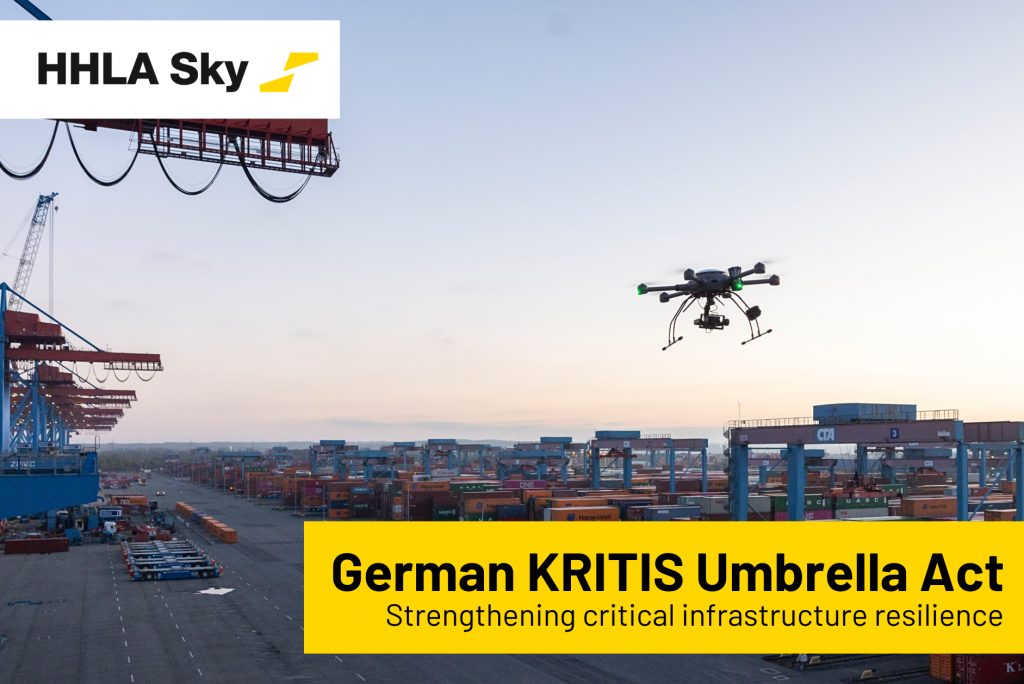
Critical infrastructure protection is entering a new phase in Europe.
With the introduction of the German KRITIS Umbrella Act (2026), that is implementing the EU Directive 2022/2557 law, operators across essential sectors must implement comprehensive measures to ensure resilience against a wide range of threats. The regulation introduces an “all-hazards approach”, requiring protection not only from cyberattacks, but also from sabotage, natural disasters, and human error.
For industries such as transport, logistics, energy, water, healthcare, and industrial operations, this marks a significant shift. Security is becoming a continuous, data-driven, and operational requirement.
The KRITIS Umbrella Act extends beyond traditional security regulations by requiring operators to:
This aligns physical security with existing frameworks like NIS2, creating a more unified approach to protecting critical infrastructure.
However, one challenge remains: how to maintain continuous visibility and control across large, complex, and often geographically distributed environments.
Critical infrastructure environments, whether ports, energy facilities, rail networks, industrial plants, or healthcare logistics systems, share common characteristics:
Traditional approaches, such as manual inspections, static surveillance systems, or periodic monitoring, are no longer sufficient. They are often resource-intensive, limited in coverage, and reactive rather than proactive.
To meet KRITIS requirements, operators need solutions that enable:
This is where automation and aerial intelligence become essential.
Autonomous drone systems are increasingly used to support inspection, security, and monitoring tasks across critical infrastructure sectors.
In energy and utilities, drones inspect pipelines, power lines, and substations, reducing inspection times and minimising human risk exposure.
In logistics and transport, including ports, drones provide real-time visibility across large operational areas, supporting both security and operational efficiency.
In industrial and chemical environments, drones enable safe monitoring of hazardous areas, reducing the need for personnel to enter high-risk zones.
Across all these use cases, drones provide one key advantage: they extend visibility and responsiveness beyond the limits of traditional systems, and also enable further automation and data processing services beyond flying.
While drone technology offers clear benefits, the real challenge lies in operating drones at scale.
Running isolated drone missions is not enough to meet KRITIS requirements. Operators must ensure:
This requires a shift from individual drone usage to integrated operational systems.
This is where solutions like those developed by HHLA Sky come into play.
HHLA Sky’s Integrated Control Center (ICC) enables centralized planning, supervision, and documentation of drone and mobile robot operations. This allows organisations to manage complex missions across multiple sites, with different types of drones while maintaining full visibility and control.
Use cases include:
Through integration with our UTM (Uncrewed Traffic Management) platform, operations can be safely coordinated within shared airspace, ensuring compliance with evolving regulatory requirements.
A key aspect of the KRITIS framework is the integration of physical and digital security.
As infrastructure becomes more connected, protecting operational systems and data is critical. HHLA Sky’s platform is designed with IEC 62443-certified cybersecurity, ensuring that both mission data and control systems remain secure.
This is particularly important in KRITIS environments, where vulnerabilities can have wide-reaching consequences across supply chains and public services.
The KRITIS Umbrella Act signals a broader transformation: critical infrastructure is moving toward continuous, automated, and resilient operations.
Technologies such as autonomous drones, centralized control platforms, and secure data systems are no longer optional enhancements. They are becoming essential tools for meeting regulatoryrequirements and ensuring operational continuity.
For operators across sectors, from logistics and energy to healthcare and industry, the focus is shifting from isolated security measures to integrated resilience strategies.
The future of critical infrastructure protection is defined by how systems work together.
Automation provides continuous monitoring. Aerial intelligence extends visibility. Centralized control ensures coordination. Cybersecurity protects the entire system.
Together, these elements create a foundation for resilient, compliant, and scalable operations in an increasingly complex risk environment.